Cold email does not fail all at once.
For most teams using Lemlist, things start off well. Open rates look healthy. Replies come in. Campaigns feel predictable. It feels like the tool is working exactly as promised.
Then something changes.
Emails that used to land in the inbox start drifting into spam or promotions. Reply rates drop without warning. As a result, volume increases but reply rates do not.
So, when teams dig into the data, there is no single switch they can point to. Everything looks “set up correctly,” yet deliverability keeps slipping. This is where lemlist deliverability issues usually begin.
The problem is not that Lemlist “does not work.” It is that Lemlist is built around email automation first, while inbox placement depends on deliverability control. Those two priorities do not always scale together.
As long as volume stays low and risk stays contained, automation feels safe. But once outbound becomes consistent and repeatable, inbox reputation starts compounding. Small missteps add up. Domain health weakens quietly.
And by the time teams notice, emails are already going to spam. This is why so many users end up searching for things like:
- lemlist emails going to spam
- lemlist cold email deliverability
- lemlist spam issues
They are not looking for new features. They are trying to understand what broke.
This guide is not a surface-level comparison or a list of generic tips. It breaks down why lemlist emails go to spam at scale, how inbox and email reputation erode over time, and where Lemlist’s automation model places responsibility on the user.
More importantly, it explains why email automation vs deliverability becomes a real trade-off at scale, and why teams that want to scale cold email safely eventually need stronger controls than warm-up alone.
If Lemlist campaigns used to work and no longer do, this will help you understand why.
Why Lemlist Emails Start Going to Spam
Most Lemlist users assume spam placement happens because of one obvious mistake. A bad subject line. Too many links. A spammy word.
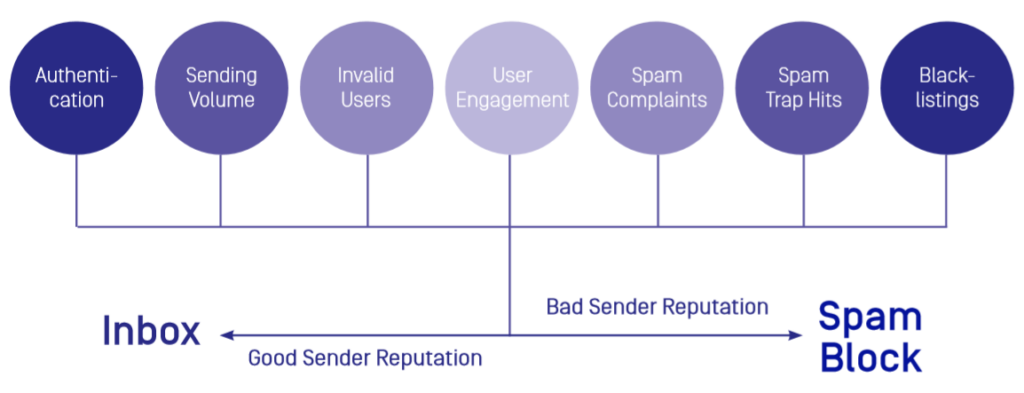
In reality, lemlist emails going to spam is almost never caused by a single action. It is caused by compounding signals that slowly damage inbox reputation as volume increases.
Automation Scales Faster Than Reputation
Lemlist makes it easy to send more emails. That is the product’s strength.
Sequences are simple to launch. Personalization tokens make outreach feel safe. Warm-up runs in the background. From a user’s perspective, everything looks controlled.
But inbox reputation does not scale linearly with volume.
Each inbox, each domain, and each sending pattern builds trust gradually. When automation ramps up faster than reputation can support it, inbox providers respond conservatively. Messages start getting filtered. First to promotions, then to spam.
This is where lemlist deliverability issues usually start. Not at the beginning, but right after early success.
Warm-Up Creates Confidence, Not Control
Lemlist relies heavily on warm-up to protect cold email deliverability. Warm-up helps, but it is often misunderstood.
Warm-up prepares an inbox to send. It does not manage what happens once real campaigns begin. As soon as outbound volume becomes consistent, reputation depends on:
- sending limits
- reply behavior
- bounce patterns
- domain health for cold email
These signals exist outside the warm-up system.
This is why many teams hit lemlist warm up limitations.
The inbox was warmed, but the system did not enforce guardrails once real outreach started. Automation continues, but reputation protection becomes manual.
Warm-up reduces early risk. It does not prevent long-term lemlist spam issues.
Inbox Reputation Degrades Quietly
One of the hardest parts of cold email is visibility.
Inbox reputation does not fail loudly. There is no alert when Gmail starts distrusting a domain. Campaigns keep sending. Opens still trickle in. Spam placement increases gradually.
This is how lemlist email reputation problems develop.
Teams often realize something is wrong only after:
- reply rates drop significantly
- open rates flatten across campaigns
- inbox placement becomes inconsistent
By then, the damage has already been done. Recovery is slower than loss.
Lemlist assumes users will monitor and manage this themselves. That works for experienced operators. It becomes risky for teams trying to scale cold email safely.
Volume Makes Small Mistakes Expensive
At low volume, mistakes are cheap.
A poorly targeted list. A weak personalization angle. A few hard bounces. Inbox providers tolerate this when volume is small.
At scale, those same mistakes compound.
Lemlist’s email automation model means mistakes are repeated efficiently. The system does not slow down when engagement drops. It does not reduce send volume automatically when risk increases. That responsibility stays with the user.
This is where lemlist cold email deliverability starts breaking down.
Emails are still being sent. But inbox trust is no longer there to support them.
Deliverability Is Treated as Setup, Not a System
The core reason Lemlist users run into spam problems is not lack of effort. It is framing.
Deliverability is treated as something you configure once. Domains are set up. Warm-up is enabled. Sequences are launched.
But deliverability is not a checklist. It is an ongoing system that needs:
- continuous monitoring
- enforced sending limits
- inbox health visibility
- domain health for cold email protection
When those controls are missing, email automation vs deliverability becomes a losing trade.
That is why Lemlist works well early and struggles later.
And that is why users eventually search for:
- why lemlist emails go to spam
- lemlist inbox reputation issues
- how to fix lemlist deliverability
How Lemlist Handles Email Automation
Lemlist is fundamentally built as an email automation tool.
Its core promise is speed and ease. You connect inboxes, build sequences, personalize messages, and start sending quickly. For many users, especially early-stage founders or small outbound teams, this approach feels intuitive and productive.
Automation in Lemlist is centered around three ideas:
- sequences should be easy to launch
- personalization should feel safe
- scaling volume should not feel complicated
From a usability standpoint, this works well. Campaign creation is straightforward. Message steps are clear. Personalization tokens make outreach feel more human without requiring deep customization. For low to moderate volume, this setup is often enough to generate replies.
This is why Lemlist performs well at the beginning.
Early outbound success reinforces confidence in automation. Users see activity, opens, and replies, and assume the system will continue to perform the same way as volume increases. The platform itself encourages this mindset by making it easy to add inboxes, increase sends, and duplicate campaigns.
However, this is where email automation vs deliverability starts to diverge.
Automation in Lemlist is optimized for execution, not constraint. The system focuses on helping users send more efficiently, not on actively regulating how sending behavior impacts inbox reputation over time.
Most of the responsibility for managing risk sits with the user:
- deciding when to increase volume
- monitoring engagement manually
- recognizing when reputation is degrading
For experienced operators, this is manageable. For teams scaling outbound quickly, it becomes fragile.
The automation layer does not slow itself down when engagement drops. It does not adapt sending behavior based on inbox health signals. It assumes the user will notice issues early and intervene.
This design choice is not inherently wrong. It simply reflects Lemlist’s positioning as an automation-first platform.
Where this becomes problematic is when users expect automation to also protect cold email deliverability by default. That expectation is common, and it is where many lemlist deliverability issues originate.
How Lemlist Approaches Email Deliverability
Lemlist does care about deliverability. But the way it approaches it is important to understand.
Deliverability in Lemlist is treated as a setup phase, not as a continuously managed system. Once inboxes are connected and warm-up is enabled, the platform assumes that ongoing reputation management will be handled externally or manually.
Warm-up is the primary deliverability mechanism.
Warm-up helps establish initial trust by simulating positive engagement between inboxes. It prepares domains and inboxes to send real campaigns. This is useful and necessary, especially for new domains.
However, warm-up is only the starting point.
Once live campaigns begin, lemlist cold email deliverability depends on factors that sit outside the warm-up process:
- how fast volume increases
- how engagement changes over time
- how many inboxes are used concurrently
- how domain reputation evolves
This is where lemlist warm up limitations become visible.
Warm-up does not enforce sending limits after launch. It does not dynamically reduce volume when replies drop. It does not provide deep visibility into inbox health or domain-level reputation. The system assumes users will interpret signals themselves.
As a result, lemlist emails going to spam often happens gradually, not immediately. Campaigns keep running. Automation continues. Inbox trust erodes quietly in the background.
Another key assumption Lemlist makes is that users will manage domain health for cold email independently. Domain rotation, reputation recovery, and long-term inbox trust are not tightly controlled at the platform level.
This works when:
- volume is low
- lists are extremely clean
- messaging is consistently strong
It becomes risky when teams try to scale cold email safely without deep deliverability expertise.
The platform does not actively protect users from repeating mistakes at scale. If a campaign underperforms, automation continues unless the user intervenes. If inbox reputation degrades, there is no built-in system forcing correction.
This is not a flaw as much as it is a design choice.
Lemlist prioritizes flexibility and speed. Deliverability safeguards are present, but they rely heavily on user awareness and discipline. When that discipline breaks down, lemlist spam issues and lemlist email reputation problems begin to surface.
These sections are important because they clarify one thing:
Lemlist is not failing users. It is doing exactly what it is designed to do.
The problem appears when automation scales faster than reputation can support it. That gap is what the next sections will unpack in detail.
The Hidden Deliverability Problems Lemlist Users Face at Scale
Most Lemlist users do not run into deliverability problems immediately. That is why these issues feel confusing when they appear.
Early campaigns work. Metrics look fine. Automation feels reliable. Then, gradually, performance starts slipping. There is no clear breaking point. Just a slow decline that is hard to diagnose.
This is what makes lemlist deliverability issues so difficult to fix. The problems are not obvious. They are structural, and they surface only when volume, consistency, and time compound.
Below are the most common hidden issues that emerge once teams try to scale.
Limited Visibility Into Inbox Health
One of the biggest challenges Lemlist users face at scale is lack of visibility.
Inbox reputation is not binary. Emails are not simply delivered or blocked. They are filtered, deprioritized, or quietly routed away from the primary inbox. Without clear signals, teams continue sending while damage accumulates.
This is how lemlist email reputation issues develop.
Lemlist does not provide deep insight into:
- inbox-level trust
- domain-level reputation changes
- early warning signs before spam placement increases
As a result, teams often realize something is wrong only after:
- reply rates drop sharply
- campaigns stop performing across inboxes
- multiple domains begin underperforming
By that point, reputation recovery is already harder.
For users without dedicated deliverability expertise, this lack of visibility makes lemlist spam issues difficult to catch early.
Managing Multiple Inboxes Becomes Fragile
Scaling outbound usually means adding inboxes.
More inboxes increase volume while spreading risk. In theory, this helps. In practice, it introduces complexity that Lemlist does not actively manage.
Each inbox has its own reputation. Each domain behaves differently. Engagement varies across senders. Without centralized safeguards, small inconsistencies compound.
This is where lemlist cold email deliverability often starts breaking down.
Common issues include:
- uneven send distribution
- inconsistent engagement across inboxes
- one weak inbox affecting domain trust
Because automation continues smoothly, these problems stay hidden until inbox placement drops across the board.
Domain Reputation Is Easy to Damage, Hard to Restore
Domain reputation is one of the most fragile parts of outbound.
At low volume, domains recover quickly. At scale, recovery slows down. Mistakes linger.
Lemlist assumes users will actively manage domain health for cold email. This includes:
- rotating domains carefully
- controlling send velocity
- monitoring bounce and complaint patterns
However, the platform does not enforce these practices. It enables automation, but it does not restrict behavior when risk increases.
This is how lemlist emails going to spam becomes a long-term problem instead of a temporary dip.
Once a domain’s reputation degrades, simply warming a new inbox does not solve the issue. The domain itself carries history, and inbox providers remember it.
Automation Repeats Mistakes Efficiently
Automation is powerful, but it is also unforgiving.
When a campaign underperforms, Lemlist does not automatically slow it down. It does not pause sending when engagement drops. It does not adjust volume based on inbox response.
Instead, automation keeps executing.
This is why email automation vs deliverability becomes such a critical trade-off at scale. The same efficiency that helps teams send more also accelerates negative signals when something goes wrong.
Small issues that would be harmless at low volume become expensive when repeated hundreds or thousands of times.
Engagement Drops Before Teams Notice
Inbox providers care deeply about engagement.
When open rates flatten or replies slow, filters adjust. This happens quietly and progressively.
Most Lemlist users notice performance decline only after results become visibly poor. By then:
- reputation has already shifted
- spam placement has increased
- recovery requires reducing volume significantly
This is where many teams realize they can no longer scale cold email safely using automation alone.
They are not doing anything obviously wrong. They are simply operating without enough control.
Deliverability Depends Too Much on User Discipline
At scale, consistency matters more than intent.
Lemlist’s approach assumes users will:
- monitor performance closely
- intervene early
- understand deliverability mechanics
For experienced outbound operators, this can work. For growing teams, it becomes risky.
As soon as discipline slips, Lemlist deliverability issues surface. Automation continues, but protection does not.
This gap between automation and control is what drives many teams to reevaluate their outbound stack.
These problems do not mean Lemlist is a bad tool. They mean Lemlist is optimized for speed and flexibility, not long-term deliverability management.
Why Email Automation Fails Before Deliverability
Most outbound tools fail in the same order.
They do not break because of features.
They break because email automation scales faster than deliverability can support.
This is not a Lemlist-specific problem. It is a structural issue in how outbound systems are designed.
Automation Is Designed to Increase Output
Email automation is built to remove friction.
Sequences are easier to launch. Inbox connections are faster. Volume can be increased with a few clicks. From a product perspective, this makes sense. Users want momentum, not constraints.
But inbox providers do not evaluate intent. They evaluate behavior.
They look at:
- sending consistency
- engagement quality
- reply patterns
- complaint signals
- historical trust
None of these scale automatically just because automation does.
This is why email automation vs deliverability becomes a real conflict at scale.
Automation encourages output. Deliverability depends on restraint.
Inbox Providers Optimize for Risk, Not Convenience
Gmail, Outlook, and other inbox providers are conservative by design.
Their job is not to help outbound teams succeed. Their job is to protect users from unwanted mail. When signals become ambiguous, filters err on the side of caution.
This means:
- inbox placement degrades before it fully breaks
- emails get filtered before they get blocked
- reputation weakens before spam rates spike
Most automation tools do not surface these early warnings.
This is how teams believe campaigns are running normally while inbox trust quietly erodes.
Scaling Exposes Weak Controls
At low volume, almost any setup works.
At scale, weaknesses surface quickly.
When automation increases:
- minor targeting issues become major
- small bounce rates compound
- weak engagement patterns repeat
Without enforced limits, automation amplifies whatever is happening, good or bad.
This is why teams trying to scale cold email safely often fail when relying only on automation logic. The system keeps executing even when signals suggest it should slow down.
Deliverability, on the other hand, improves only when systems actively limit risk.
Deliverability Requires Continuous Oversight
This is not a feature you turn on. It is a condition you maintain.
It depends on:
- inbox reputation trends
- domain health for cold email
- engagement stability over time
- consistent sending behavior
Automation tools generally treat deliverability as a setup requirement. Once configured, they assume it is “handled.”
That assumption holds until volume increases.
This is why cold email deliverability tools that focus on monitoring and control tend to outperform automation-first tools over time. They are built to protect trust, not just increase activity.
Volume Changes the Cost of Mistakes
At a small scale, mistakes are recoverable.
On a larger scale, they are not.
A weak campaign sent to 50 contacts produces noise.
The same campaign sent to 5,000 contacts produces reputation damage.
Automation makes repetition easy. Inbox providers penalize repetition when engagement is poor.
This asymmetry is why deliverability always breaks before automation.
Automation does not feel pain immediately. Reputation does.
Deliverability Systems Behave Differently
Systems designed around deliverability behave differently by default.
They:
- slow down when engagement drops
- restrict volume increases
- surface risk early
- protect domains even when users push limits
These systems feel restrictive at first. Over time, they outperform automation-first setups because they preserve inbox trust.
This distinction is critical to understanding why Lemlist works well early, but struggles later.
And it explains why teams eventually look beyond automation toward tools that treat deliverability as a system, not a setting.
What Deliverability Control Actually Looks Like
Deliverability control is often misunderstood.
Many teams assume deliverability is something you configure once. You warm up inboxes, verify domains, and follow basic best practices. If emails land initially, the system must be working.
That assumption holds only at low volume.
At scale, deliverability control is not about setup. It is about continuous regulation of how outbound behavior impacts trust over time.
This is where most email automation tools fall short.
Inbox Health Must Be Observable
You cannot control what you cannot see.
True deliverability control starts with visibility into inbox reputation, not just surface metrics like opens and replies. Inbox providers adjust trust gradually, and those changes rarely show up immediately in campaign stats.
Deliverability-focused systems surface early indicators, such as:
- engagement decay patterns
- sudden changes in inbox placement
- performance divergence between inboxes
- domain-level reputation shifts
Without this visibility, teams continue sending while damage accumulates.
This is why users dealing with lemlist deliverability issues often realize the problem too late. Automation hides early warning signs instead of highlighting them.
Sending Limits Must Be Enforced, Not Suggested
Most tools rely on guidance.
They recommend daily limits. They warn against aggressive scaling. But they still allow users to push past safe thresholds.
Deliverability control works differently.
Systems designed for cold email deliverability enforce constraints automatically. They limit:
- daily and hourly send volume
- rate of scale-up
- simultaneous inbox activity
These limits feel restrictive at first. Over time, they protect domain health for cold email and preserve inbox trust.
This is a key difference between automation-first platforms and true cold email deliverability tools.
Domains Need Ongoing Protection
Domains are long-term assets.
Once a domain’s reputation degrades, recovery is slow and uncertain. This is why lemlist email reputation problems become persistent instead of temporary.
Deliverability control treats domains as something to protect continuously, not something to rotate when things go wrong.
That includes:
- controlled ramp-up
- consistent sending behavior
- minimizing sudden changes
- avoiding unnecessary risk even when campaigns perform well
Automation alone cannot make these decisions. Systems need guardrails that prioritize trust over output.
Volume Should Respond to Engagement
One of the most important aspects of deliverability control is adaptability.
When engagement drops, volume should slow down; replies flatten, risk should be reduced; signals recover, scale can resume.
Automation-first tools do not do this.
They execute sequences regardless of outcome. Deliverability-first systems adapt behavior based on feedback.
This responsiveness is what allows teams to scale cold email safely without burning inboxes.
Control Is Proactive, Not Reactive
Most deliverability efforts are reactive.
Teams respond after emails start going to spam. They reduce volume after reputation drops. They warm new inboxes after domains are damaged.
Deliverability control works upstream.
It prevents damage instead of fixing it. It assumes mistakes will happen and builds systems that limit the impact when they do.
This proactive posture is what separates sustainable outbound from short-term success.
Deliverability Is a System, Not a Feature
The biggest shift teams need to make is mental.
Deliverability is not:
- warm-up
- copy quality
- personalization
- one-time configuration
Those are inputs.
Deliverability is the system that governs how those inputs behave over time.
When teams rely solely on email automation, that system is weak or missing. When they adopt deliverability-first tools, it becomes foundational.
This is why automation-first platforms struggle at scale, and why teams eventually move toward systems that treat deliverability as a core constraint, not an afterthought.
How Salesgear Solves Deliverability at Scale
Lemlist is strong at making email automation fast to launch. Salesgear, by contrast, puts more emphasis on guardrails that help teams maintain cold email deliverability as outbound volume increases.
The difference is not about sending more emails. It is about protecting inbox reputation and domain health for cold email as outreach becomes consistent and repeatable.
That difference shows up clearly once teams move past small experiments and into daily outbound.
Deliverability Is Treated as an Operating Constraint
Salesgear assumes that deliverability risk increases as soon as outbound becomes routine.
As volume grows, inbox trust becomes more fragile. Small mistakes compound. Engagement fluctuates. Instead of assuming users will manually adjust sending behavior, Salesgear builds constraints directly into how outbound runs.
This is how email automation vs deliverability is resolved in practice.
Automation still exists, but it operates inside limits designed to protect inbox placement rather than override it.
Automated Email Warming That Supports Real Sending
Salesgear includes automated email warming to help inboxes establish initial trust before outbound begins. This prepares inboxes for real campaigns instead of forcing users to rely entirely on external tools or manual processes.
More importantly, warming is treated as a baseline, not a guarantee.
Once campaigns are live, the system does not assume deliverability is “handled.” It continues to apply controls that protect inbox reputation as real sending behavior takes over.
This helps avoid the false sense of safety that leads to early success followed by lemlist deliverability issues at scale.
Inbox Rotation Reduces Concentrated Risk
One of the biggest causes of deliverability breakdown is sending too much from a single inbox.
Salesgear addresses this through inbox rotation, where scheduled emails are automatically split across connected inboxes. Instead of concentrating volume in one sender, outbound load is distributed evenly.
This matters because inbox providers evaluate behavior at the sender level. When one inbox carries disproportionate volume, trust erodes faster.
Inbox rotation helps:
- reduce sudden spikes from individual inboxes
- balance engagement signals across senders
- protect overall inbox reputation
This directly reduces the risk of Lemlist emails going to spam when volume increases unevenly.
Enforced Maximum Send Limits Protect Domain Health
Salesgear enforces a maximum email send limit of 100 emails per inbox per day.
To protect long-term domain health for cold email, the product explicitly recommends keeping this limit below 200. This is not just guidance. It is a structural safeguard designed to prevent aggressive scaling from damaging reputation.
These limits exist to counter a common automation failure mode: increasing volume because early results look good.
By capping daily sends, Salesgear reduces the likelihood of:
- sudden reputation drops
- inbox filtering caused by volume spikes
- long-term email reputation damage
This is a clear example of deliverability being prioritized over raw output.
Minimum Delay Between Emails Prevents Spam-Like Behavior
Another subtle but important safeguard is the minimum delay of 120 seconds between each email sent.
Inbox providers watch sending patterns closely. Rapid, uniform sending behavior is one of the easiest ways to trigger filtering. Even well-written emails can land in spam if they are sent too quickly.
By enforcing a delay between emails, Salesgear ensures:
- sending patterns look human, not automated
- inbox trust is preserved over time
- campaigns scale gradually instead of aggressively
This delay works quietly in the background, but it plays a critical role in helping teams scale cold email safely without tripping spam filters.
Automation Responds to Risk, Not Just Output
Taken together, these controls change how automation behaves.
Salesgear does not optimize automation purely for speed. It optimizes it for sustainability. Volume is allowed only where inbox trust can support it. Risk is limited even when campaigns are performing well.
This reduces the likelihood of repeating mistakes at scale, which is one of the main drivers behind persistent lemlist spam issues and lemlist email reputation problems over time.
Less Reliance on Constant User Discipline
Many deliverability failures happen not because users ignore best practices, but because maintaining discipline at scale is hard.
Salesgear reduces that burden by embedding safeguards directly into outbound behavior. Teams do not need to constantly watch dashboards or manually throttle campaigns to avoid damage.
The system assumes mistakes will happen and limits their impact.
The Practical Outcome
The practical outcome of this approach is steadier performance over time.
Teams using Salesgear tend to experience fewer sudden drops in inbox placement, less domain burn, and more predictable outbound results. Automation may feel more constrained initially, but it holds up better as outbound becomes a long-term motion.
This difference in approach sets up a clear comparison.
Lemlist vs Salesgear: Automation vs Deliverability Control
Lemlist and Salesgear solve the same high-level problem: outbound email at scale.
They differ in where they place constraints.
Lemlist prioritizes email automation speed and flexibility.
Salesgear prioritizes cold email deliverability stability and control.
That difference becomes obvious only when outbound is no longer experimental.
Core Philosophy: Speed vs Stability
Lemlist is designed to help users launch campaigns quickly. Sequences are easy to set up, personalization is straightforward, and scaling volume feels frictionless. For early-stage outbound, this works well.
Salesgear takes a more conservative posture. Automation exists, but it operates within guardrails designed to protect inbox reputation and domain health for cold email over time.
In practice, this means Lemlist feels faster early, while Salesgear feels steadier later.
This is the root of the email automation vs deliverability trade-off.
Automation Behavior at Scale
With Lemlist, automation continues unless the user intervenes. Campaigns keep running even when engagement drops. Send volume increases as long as inboxes are connected and sequences are active.
This places responsibility on the user to detect risk early and manually slow down.
Salesgear handles automation differently. Volume is constrained by:
- maximum email send limits
- minimum delays between emails
- inbox rotation across connected inboxes
These constraints mean automation does not blindly repeat behavior when scale introduces risk. It is intentionally harder to overload a single inbox or domain.
This difference directly affects long-term Lemlist deliverability issues versus sustained inbox placement.
Deliverability Controls Compared
Lemlist
- Relies heavily on warm-up
- Assumes users will manage ongoing risk
- Does not enforce send caps beyond guidance
- Leaves inbox and domain protection largely manual
This works when volume is low and discipline is high. It becomes fragile as teams scale.
Salesgear
- Uses automated email warming as a baseline
- Enforces send limits (default 100 emails per inbox per day)
- Requires a minimum 120-second delay between emails
- Automatically distributes load using inbox rotation
These controls are not optional. They are built into how outbound runs.
As a result, Salesgear reduces the chance of sudden lemlist emails going to spam–style failures caused by aggressive scaling.
Inbox and Domain Risk Management
Inbox providers penalize patterns, not tools.
With Lemlist, it is possible to concentrate volume unintentionally in a single inbox or domain. When that happens, Lemlist email reputation can degrade quickly, especially if engagement fluctuates.
Salesgear’s inbox rotation and enforced pacing distribute risk more evenly. No single inbox carries disproportionate load, which helps maintain inbox reputation across senders.
This matters more as teams add inboxes and scale outbound beyond a handful of campaigns.
Scaling Experience for Teams
For individuals or very small teams, Lemlist’s flexibility is often an advantage. It allows experimentation without much friction.
For teams running daily outbound at scale, flexibility becomes a liability if it is not paired with control.
Salesgear is designed to help teams scale cold email safely without requiring constant manual oversight. Guardrails reduce the chance of accidental overuse, delayed response to engagement drops, or domain damage.
This difference shows up most clearly after weeks or months of continuous sending.
Operational Burden
Lemlist assumes users will actively manage deliverability:
- monitoring engagement trends
- adjusting volume manually
- rotating domains when needed
Salesgear reduces that operational burden by embedding safeguards into the system. Users still make strategic decisions, but the platform limits how damaging mistakes can be.
This is especially relevant for growing teams where outbound discipline varies across reps.
Summary: Two Valid Tools, Different Trade-Offs
This comparison is not about which tool is “better.” It is about what kind of outbound motion you are running.
- Lemlist optimizes for automation speed and flexibility
- Salesgear optimizes for deliverability control and stability
When outbound volume is low, the difference is subtle.
When outbound becomes consistent and scaled, the difference becomes structural.
That is why teams that start with Lemlist often reevaluate their stack once Lemlist deliverability issues begin to appear and inbox trust becomes harder to maintain.
Lemlist vs Salesgear: Feature-by-Feature Comparison
| Category | Lemlist | Salesgear |
| Primary focus | Email automation speed and flexibility | Cold email deliverability with controlled automation |
| Automation philosophy | Automate first, rely on user discipline to manage risk | Automate within guardrails that protect inbox trust |
| Automated email warming | Available | Available |
| Inbox rotation | Manual setup and monitoring required | Automatic inbox rotation to distribute sending load |
| Maximum emails per inbox per day | User-defined, guidance-based | Hard limit of 100 emails per inbox (recommended <200 for domain health) |
| Minimum delay between emails | Configurable, not enforced | Enforced 120-second minimum delay |
| Deliverability safeguards | Mostly advisory | Built-in and enforced |
| Inbox reputation visibility | Limited, indirect | Stronger emphasis on inbox health monitoring |
| Domain health protection | Largely manual | Designed to protect domain health over time |
| Behavior when engagement drops | Automation continues unless user intervenes | Automation constrained to reduce risk |
| Risk of inbox overload | Higher at scale if not carefully managed | Lower due to enforced pacing and rotation |
| Scaling experience | Feels fast early, fragile at scale | Feels conservative early, stable at scale |
| Operational burden | Requires ongoing manual oversight | Reduced reliance on constant monitoring |
| Best suited for | Individuals, small teams, low-volume outbound | Teams running consistent, scaled outbound |
| Typical failure mode | Lemlist emails going to spam as volume increases | Slower initial scaling, but fewer sudden drops |
Pricing Reality: What Scaling Actually Costs
When teams compare outbound tools, they usually start with subscription pricing. That works at low volume. At scale, it hides where real costs come from.
To understand the true cost, you have to separate email automation from deliverability, because Lemlist treats them as two different layers.
Lemlist Pricing: Automation and Deliverability Are Separate
Lemlist’s core product is an email automation platform. This is what most teams pay for first.
- Lemlist Email plans typically start around $69 per user/month
- Higher tiers (multichannel, advanced features) go up to $99 per user/month or more
This pricing gives you:
- campaign automation
- personalization
- sequencing
- multichannel steps
However, deliverability is not fully handled by the core Lemlist product.
To manage deliverability, Lemlist offers Lemwarm as a separate tool.
- Lemwarm is priced additionally, usually per inbox
- As teams add more inboxes, Lemwarm cost increases linearly
- Automation and deliverability are billed independently
In practice, this means:
- Email automation lives in Lemlist
- Deliverability protection lives in Lemwarm
For small setups, this separation is manageable. At scale, it changes the cost structure significantly.
What This Separation Means at Scale
As outbound volume increases, teams typically need:
- more inboxes
- more domains
- more warm-up capacity
Because Lemlist and Lemwarm are separate, scaling outbound often means:
- paying for more Lemlist seats
- paying again for more Lemwarm inboxes
This is before accounting for:
- inbox rotation
- sending limits
- pacing controls
Those remain largely manual.
This separation is one reason Lemlist deliverability issues tend to appear later. Automation scales easily, while deliverability requires additional tooling, cost, and discipline.
Salesgear Pricing: Automation and Deliverability in One System
Salesgear approaches pricing differently.
Email automation and deliverability controls are not split into separate products. Instead, deliverability safeguards are embedded into how outbound runs.
Salesgear plans typically range from:
- a free tier for experimentation
- to paid plans starting around $49–$99 per user/month, depending on credits and usage
Within the same system, teams get:
- automated email warming
- inbox rotation
- maximum email send limits (default 100 per inbox)
- minimum delay between emails (120 seconds)
There is no separate deliverability add-on that scales cost independently as inbox count increases.
This does not make Salesgear cheaper by default. It makes costs more predictable as outbound scales.
The Hidden Cost of Deliverability Decay
When deliverability breaks, the cost is rarely obvious.
With Lemlist setups, teams often respond to spam placement by:
- adding more inboxes
- adding more Lemwarm subscriptions
- rotating domains
Each step increases monthly spend while outbound performance is still recovering.
At the same time, automation continues sending, which can further weaken inbox reputation if not tightly controlled.
This is how teams end up paying for:
- automation that produces fewer replies
- deliverability tools that are constantly catching up
- operational time spent managing damage
These costs never show up on a pricing page.
Why Integrated Deliverability Changes the Cost Curve
Salesgear’s model shifts cost from reactive to preventive.
Because pacing, limits, and rotation are enforced:
- inboxes are less likely to burn
- domains last longer
- warm-up is not constantly restarted
The result is fewer forced resets and fewer incremental costs layered on top of automation.
Over months of consistent outbound, this difference compounds.
The Real Pricing Question
The question is not:
“Which tool has the lower sticker price?”
It is:
“Do I pay for deliverability as a separate add-on that grows with risk, or do I run outbound in a system where deliverability limits are built in from the start?”
For short, low-volume campaigns, the difference is small.
For scaled outbound, separating email automation and deliverability almost always increases total cost.
When Lemlist Is the Better Choice
Lemlist makes the most sense when outbound is lightweight, flexible, and short-lived.
It works best when:
- outbound volume is intentionally low
- campaigns are time-bound or experimental
- speed matters more than long-term stability
For solo founders, consultants, or small teams testing outbound, Lemlist’s email automation-first approach lowers friction and accelerates learning.
Lemlist is also a reasonable fit when teams already have strong deliverability processes in place and are comfortable managing inbox reputation and domain health for cold email manually using separate tools like Lemwarm.
In these cases, Lemlist acts as an execution layer, not a deliverability system.
The trade-off is that automation scales faster than protection. As long as that risk is acceptable, Lemlist does its job well.
When Salesgear Is the Better Choice
Salesgear is the better choice when outbound is expected to scale and stay reliable over time.
It fits teams that:
- run outbound daily
- involve multiple reps or inboxes
- depend on outbound for pipeline
Salesgear emphasizes cold email deliverability through enforced limits, inbox rotation, pacing, and integrated warming. Automation still exists, but it operates within boundaries that protect inbox reputation as volume compounds.
This makes Salesgear a stronger fit when teams want:
- fewer deliverability surprises
- less operational overhead
- predictable results over months, not weeks
Salesgear trades early flexibility for long-term stability. For teams past the experimentation phase, that trade-off usually pays off.
Final Verdict: Fixing Deliverability Before It Breaks
Most outbound tools do not fail because they stop working.
They fail because teams keep using them the same way while conditions change.
Early on, email automation is enough. Volume is low. Risk is contained. Results come quickly. Tools like Lemlist shine in this phase because they optimize for speed and flexibility.
The problem starts when outbound becomes consistent.
As volume increases, inbox providers stop evaluating individual emails and start evaluating patterns. Trust compounds slowly. Damage compounds faster. This is when cold email deliverability becomes the real bottleneck, not features or personalization.
That inflection point is where the difference between Lemlist and Salesgear becomes clear.
Lemlist assumes users will manage deliverability risk manually, often with a separate tool like Lemwarm.
This works as long as discipline is high and scale is limited. Once outbound becomes team-driven and always-on, that separation creates friction, cost creep, and delayed reactions.
Salesgear takes a more constrained approach. By enforcing limits, pacing, inbox rotation, and integrated warming, it reduces the chance that automation will outrun inbox trust. Growth feels slower at first, but it holds up longer.
This is not about which tool is “better” in general. It is about when each tool makes sense.
- If outbound is experimental, short-term, or low volume, automation speed wins.
- If outbound is core to the pipeline and expected to run continuously, deliverability control wins.
Most teams only realize this after deliverability breaks. By then, inboxes are burned, domains are weakened, and recovery is expensive.
The real advantage is not fixing deliverability after the fact.
It is choosing a system that treats deliverability as a constraint from the start.
That decision determines whether outbound compounds quietly or slowly collapses under its own volume.